

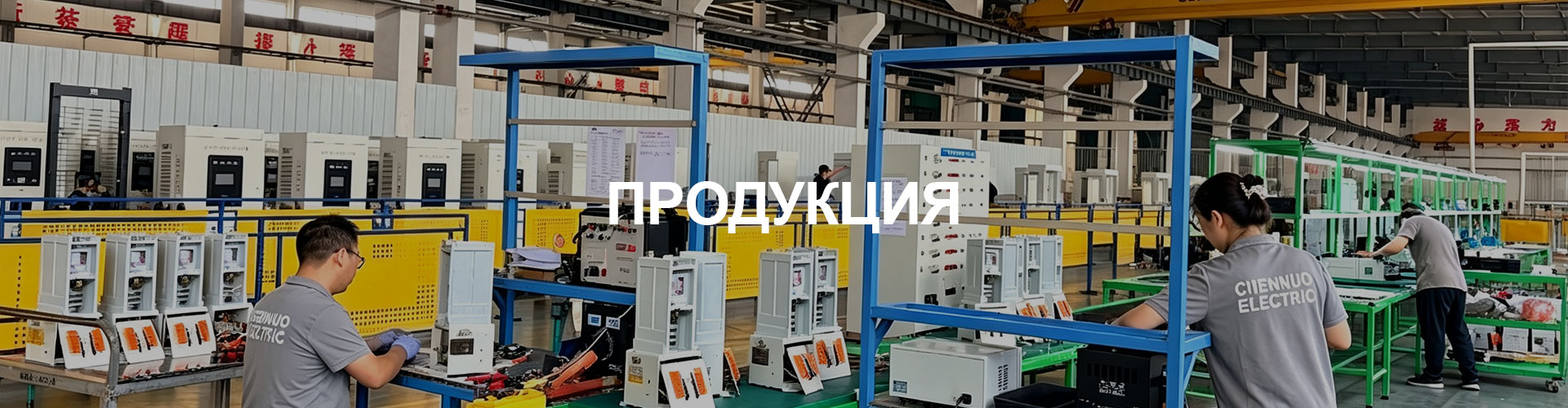
Products



CFS6-12-40.5 Series High Voltage SF6 Outdoor Load Switch
This series of pole-type outdoor load switches is a new type of switchgear developed by our company for end-users of electricity 12/24/40.5 kV and below, capacitor reactive power compensation plants, as well as small generating enterprises.
Description
marker
Product Description
This series of pole-type outdoor load switches is a new type of switchgear developed by our company for end-users of electricity 12/24/40.5 kV and below, capacitor reactive power compensation plants, as well as small generating enterprises. This product is designed to switch on and off load current and overload current in three-phase AC distribution networks of 40.5 kV and below. It has such advantages as small footprint, quick installation, low construction cost and ease of use.
Thanks to its special design and large internal space, the load switch allows the convenient installation of several current transformers and voltage sensors. When combined with a dedicated control device as a recloser of class 35 kV and below, it is capable of effectively distinguishing between ground faults inside and outside the service area.
When a load switch operates together with a fuse, a motor drive is used, which, in combination with a specialized imported control device, independently detects the blown fuse, after which the load switch is turned off, promptly isolating the damaged section of the line and effectively preventing accidents caused by the operation of electrical equipment in open-phase mode. In this case, a cartridge-type fuse can also be used as a visible break.
The load switch is made of a three-phase design with a common housing, the main circuit and the mechanism are enclosed in one housing, which ensures complete absence of the need for maintenance during the entire service life. The body is made by stamping from high-quality stainless steel, the welds are made by robotic welding. The internal volume is filled with low pressure SF6 gas and equipped with a low pressure protection sensor to prevent accidents caused by operating the switch under low pressure. To adapt to different operating conditions, the circuit breaker can be equipped with different terminal connection methods (type with porcelain bushings; type with composite bushings; type with porcelain cable glands; type with composite cable glands).


| No. | Parameter name | Unit change | Meaning | ||
| 1 | Rated voltage | kV | 12/24/40.5 | ||
| 2 | Rated frequency | Hz | 50/60 | ||
| 3 | Nominal insulation level (at gas pressure SF₆ 0.15 MPa / 20°C) | Lightning impulse test voltageVoltage | between phases and relative to ground | kV | 185 |
| breaking gap | 215 | ||||
| Power frequency test voltage for 1 min | between phases and relative to ground | kV | 95 | ||
| breaking gap | 110 | ||||
| 4 | Rated current | A | 630 | ||
| 5 | Rated breaking capacity at load current (at 0.15 MPa / 20°C) | A | 630 | ||
| 6 | Breaking capacity at zero overpressure | A | 630 | ||
| 7 | Rated peak current withstand current | kA | 50 | ||
| 8 | Rated short-circuit inrush current | kA | 50 | ||
| 9 | Rated short-time current | kA/s | 20/4 | ||
| 10 | Current transformer parameters | A | 600/5 | ||
| 11 | Voltage sensor parameters | B | 5770/0.6 | ||
contact us
Related Popular Products

CKJ40 Series Low Voltage Vacuum Contactor
This series of high-performance vacuum contactors meets the requirements of the GB14048.4 standard and, in terms of its technical characteristics, reaches the advanced domestic and world level.

High Voltage High Speed Magnetic Controlled Vacuum Circuit Breaker CNK8 Series
The high-voltage magnetic drive high-voltage vacuum circuit breaker is a key new generation switchgear that combines magnetic drive and vacuum arc extinguishing technology.

High voltage vacuum circuit breaker ZW32-33F
The ZW32-33F series outdoor high voltage vacuum circuit breaker is designed for use in 50Hz AC three-phase electrical systems with a rated voltage of 33kV for switching load current, overload current and short-circuit current.

Wind generation in low winds
Chenno company presents vertical wind generators of the CZF1 series with a power from 5 to 100 kW. The devices are suitable for powering urban and rural homes, ports, highway rest areas and remote areas without access to the network.

High voltage vacuum circuit breaker ZN85-40.5 kV
The high-voltage vacuum circuit breaker for indoor installation ZN85-40.5 (hereinafter referred to as the circuit breaker) is intended for use in three-phase alternating current electrical power systems with a frequency of 50 Hz and a rated voltage of 40.5 kV.

CNE Series Low Voltage Vacuum Contactor
This series of high-performance vacuum contactors meets the requirements of the GB14048.4 standard and, in terms of its technical characteristics, reaches the advanced domestic and world level.

High-voltage neutral grounding switch for outdoor installation, GW13-12 series 20 35 66 110
The GW13 series outdoor neutral grounding device is mainly used in electrical systems of voltage classes from 12 kV to 110 kV as a grounded transformer neutral protection device.

Indoor Vacuum Switch Switch FZ(R)N25-12 Series
The indoor high voltage AC vacuum load switch type FZN25-12D (hereinafter referred to as the load switch) and the combined device - indoor high voltage AC vacuum load switch with fuse type FZRN25-12D (hereinafter referred to as the combined device) are control and protection devices in three-phase AC 50 Hz, 12 kV distribution systems.

GW4-126 Series Outdoor High Voltage Disconnector
The GW4-126kV series outdoor high-voltage disconnect switch is an outdoor high-voltage electrical equipment for 50Hz three-phase alternating current.

JCZ8G-12 Series High Altitude Vacuum Contactor
This series of high voltage vacuum contactors for high mountain areas is developed by our company in accordance with market needs. The contactors are equipped with high quality military grade vacuum arc chutes.

Wall mounted battery for home
Changzheng New Energy Company presents a wall-mounted storage battery for home based on lithium iron phosphate with a voltage of 57.6 V and a capacity of 86 Ah. The capacity of one module is 4.953 kWh. Parallel connection of several modules is supported to expand the energy storage system up to 10–30 kWh. The battery is compatible with solar panels and inverters, providing backup power for household needs.

High Voltage Vacuum Switch with Permanent Magnets for Switching Capacitors ZN3A-ZNT3
This series of high voltage magnetic drive vacuum circuit breakers is equipped with high quality vacuum arc chutes, as well as advanced and reliable bistable magnetic drive and intelligent controller.

Indoor Vacuum Load Switch FZ(R)N35-40.5 Series
Combined device - indoor high voltage vacuum load switch with fuse (hereinafter referred to as combined device) is a switching equipment specially designed for new energy fields such as wind power and photovoltaic power.

JCZ1-12 Series Vacuum Contactor
This series of high voltage vacuum contactors adopts high quality vacuum arc chutes combined with metal frame and insulation supports to provide superior breaking performance.

Outdoor high voltage disconnect switch GW5-40.5 series
This series of high voltage disconnectors is a new type of switching device, modernized and designed by our factory in accordance with current national and international standards to eliminate some of the problems inherent in the previous GW5 disconnectors.

CKJ5 Series Low Voltage Vacuum Contactor
This series of vacuum contactors is designed for use in AC electrical networks with a frequency of 50–60 Hz with a rated main circuit voltage of up to 1.6 kV and a rated current of 160 A, 250 A, 400 A and 630 A.
-


-
-


-
-


-


whatsapp

-
WeChat
